
• HOME
  • ICAR
  • RTI
  • DATABASES
  • BIOINFORMATICS
  • LIBRARY
  • DOWNLOADS
  • PHOTOGALLERY
  • OPPORTUNITIES
Main Menu
  • CPCRI in a nutshell
    • Institute
      • About Institute
      • Locations

      • Mandate
      • Vision
      • Organogram
      • Committees
        • Committees
        • Other Committees
      • Cadre Strength
      • Former Directors
    • Divisions
      • Crop Improvement
      • Crop Production
      • Crop Protection
      • Physiology Biochemistry and Post Harvest Technology
      • Social Science
    • Regional Stations
      • Regional Station, KAYAMKULAM
      • Regional Station, VITTAL
      • Regional Station, MINICOY
    • Research Centres
      • Research Centre,KIDU
      • Research Centre,KAHIKUCHI
      • Research Centre,MOHITNAGAR
    • AICRP on Palms
    • KVK
      • Kasaragod
      • Kayamkulam
    • The Indian Society for Plantation Crops
  • Research
    • Projects
      • Externally Funded
      • Institutional
    • Research Achievements
      • Crop Improvement
      • Crop Production
      • Crop Protection
      • Plant Physiology Biochemistry and PHT
      • Social Science
    • Varieties/ Hybrids Developed
    • Collaborations
    • Patents
    • Technologies for Commercialisation
    • Technologies Commercialized
  • Directory
  • Staff profile
    • Scientific Staff
  • Publications
    • List of Latest Publications
    • Annual Reports
    • Research Highlight
    • News Letters
    • Vision 2030
    • Free Publications
    • Publications for Sale
    • Digital Repository
  • Awards/Honours
  • Services
    • Consultancy
    • Analytical Services
  • Training
  • Extension
    • ATIC
    • Transfer of Technology
  • Facilities
    • Laboratories/Equipments
    • Farm
    • ATIC
    • Bioinformatics Centre
    • Agribioinformatics
    • Library
    • AKMU
    • Conference Hall
    • Guest House
Language
  • Hindi
News/Announcements
  • News
  • Media Releases
Staff Corner
  • MIS
  • Seniority List
  • Circulars
  • Downloads
  • ISTM Training

Crop Improvement

Genetics and Plant Breeding
  • World's largest germplasm collection of coconut (comprising 401accessions 269 indigenous and 132 exotic) is being maintained in the Institute.  The exotic collections are from 28 countries of South Asia, South-East Asia, Africa, Caribbean Islands, Indian Ocean Islands and Pacific Ocean Islands.
  • Released nine improved varieties of coconut (Chandra Kalpa, Kera Chandra, Chowghat Orange Dwarf, Kalpa Pratibha, Kalpa Dhenu, Kalpa Mitra, Kalparaksha, Kalpasree, Kalpatharu) .

  • Released five high yielding hybrids of coconut - Chandra Sankara, Kera Sankara, Chandra Laksha,   Kalpa Samrudhi and  Kalpa Sankara.
  • Chowghat Orange Dwarf released for tender coconut
  • Chandra Kalpa, Kalpa Mitra, Kalpa Dhenu, Kalpa Pratibha Kalpatharu and Kalpa Samrudhi  are relatively tolerant to drought. Kalparaksha, Kalpasree  and Kalpa Sankara  for  root (wilt) disease tracts
  • Kalpa Pratibha, Kalparaksha, Kalpasree,  Kalpa Samrudhi  as dual purpose varieties for copra and tender coconut.
  • Kalpatharu for ball copra production.
  • Coconut descriptors prepared for 74 accessions and important accessions registered.

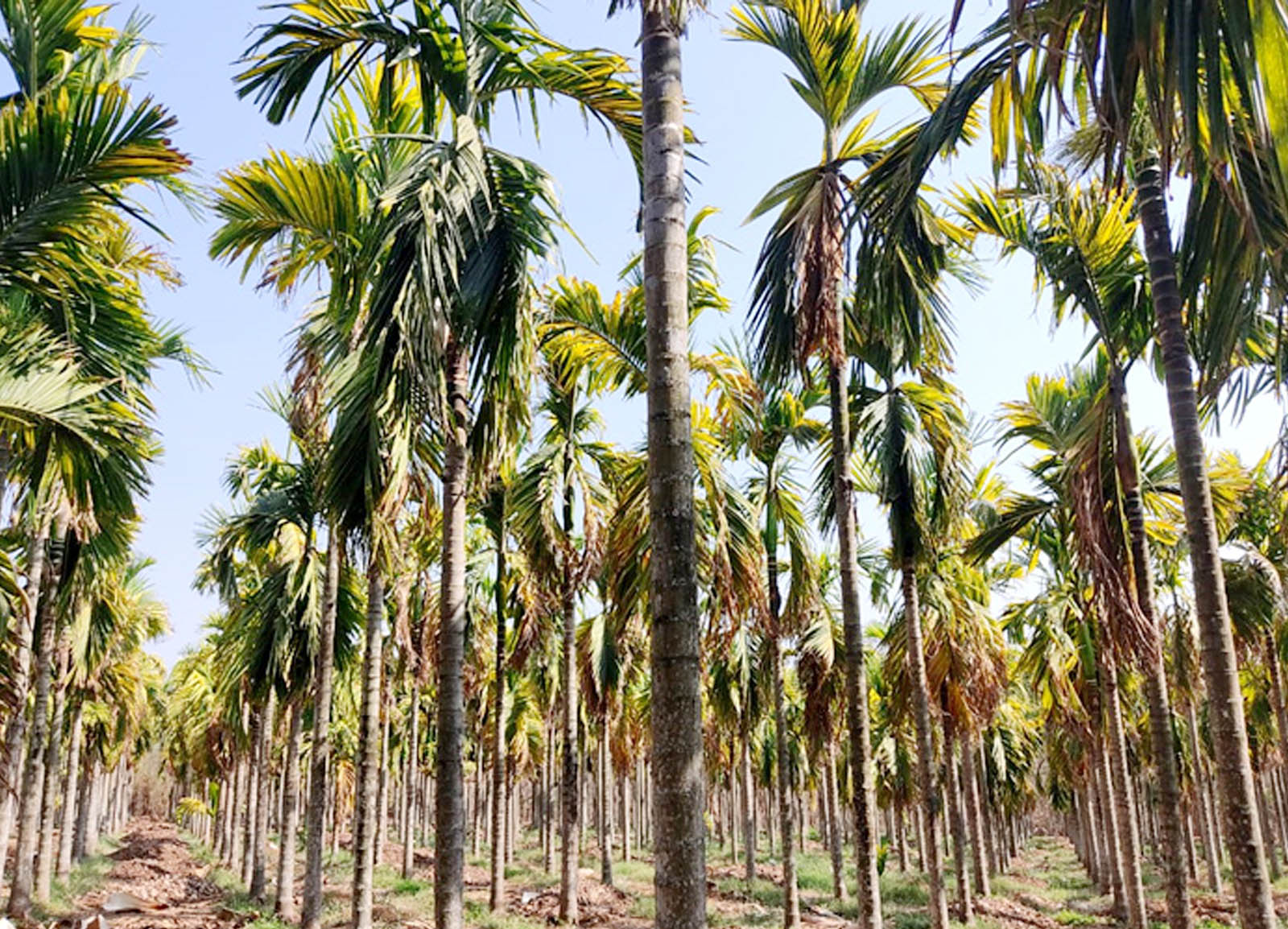
  • In arecanut,164 germplasm collections of which 23 exotic and 141 indigenous are conserved at CPCRI,RS, Vittal
  • Released six high yielding varieties (Mangala, Sumangala, Sreemangala, Mohitnagar, Swarnamangala and Kahikuchi) and two hybrids of arecanut (VTLAH1 and VTLAH2)

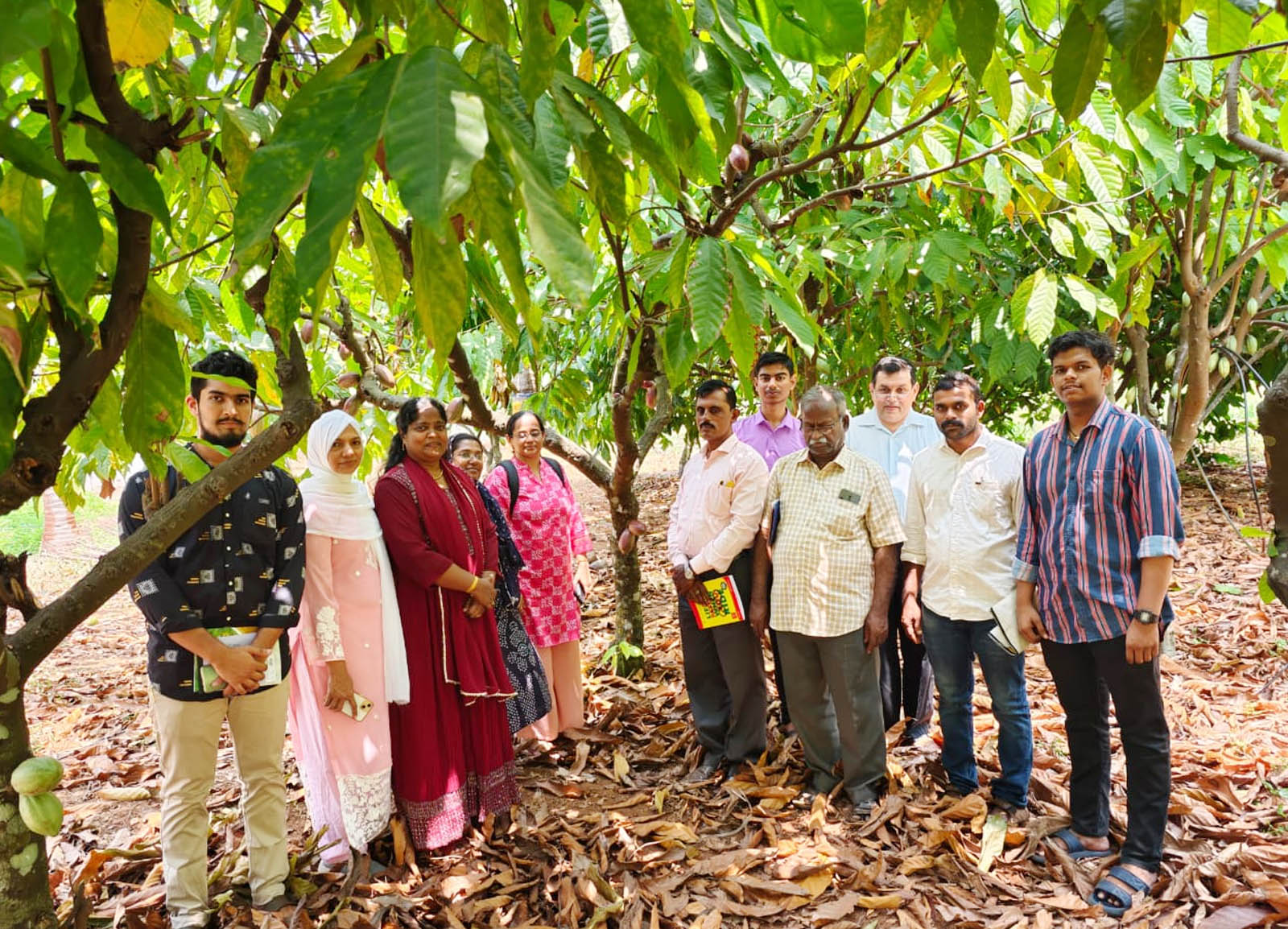
  • In cocoa 261  germplasm collections  which include 225 exotic and 36 indigenous collections
  • Developed one clone (VTLCC1) and four hybrids (VTLCH1, VTLCH2, VTLCH3 and VTLCH4) of cocoa giving high bean yield, of which VTLCH3 and VTLCH4 are drought tolerant.
  • Softwood grafting technology has been standardised in cocoa and utilised for mass multiplication.
  • Quality planting material of mandate crops are being produced to the extent of more than 1.2 lakh coconut seed nuts, 3 lakh arecanut seed nuts and 1.1 lakh cocoa grafts/ seedlings.

Biotechnology

  • Protocol for regeneration of coconut plantlets from plumule explants through somatic embryogenesis developed.
  • Cryopreservation techniques have been standardized for mature coconut zygotic embryos and coconut pollen

  • DNA finger printing using molecular markers viz. RAPD, AFLP, DAF and microsatellites have been carried out in coconut and cocoa accessions to document the genetic integrity and diversity. About 139 coconut accessions have been characterized using SSR markers.  Mother palms used for seed production have been genotyped to develop markers for hybridity. Diverse germplasm accessions including dwarfs and talls are being used for developing markers for dwarf plant habit.
  • Tissue culture protocol has been standardised  for mass multiplication of arecanut from inflorescence explants and genetic  fidelity of in vitro derived plantlets has been assesed using molecular markers

  • Transcripts induced during water stress have been identified using differential display RT-PCR technique (DDRT-PCR). The clones were characterized into different functional groups based on the sequence similarities.
Cloning and identification of transcripts induce during water-stress in coconut
  • The nucleotide and protein sequences pertaining to known genes induced during water stress viz. DREB, 14-3-3, aquaporins,9-cis-epoxycarotenoid dioxygenase, WRKY , NAC and epicuticular wax (CER, GL and Wax) were retrieved from the NCBI. Nucleotide sequences coding for conserved domain amino acids were selected for oligomer designing. The degenerate primers were used to amplify putative water stress responsive genes in coconut via RT-PCR. Amplicons of expected sizes were eluted, cloned and sequenced. Positive sequences were deposited in Genbank.

Isolation of genes induced during somatic embryogenesis in coconut.
  • The nucleotide and protein sequences pertaining to genes induced during somatic embryogenesis viz. SERK (somatic embryogenesis receptor kinase) and BBM (BABY BOOM) were retrieved from the NCBI.  Nucleotide sequences coding conserved domain amino acid was selected for oligomer designing. These degenerate primers were used to amplify, clone and sequence SERK and BBM genes in coconut
Cross transferability of SSR makers from coconut to related palms.
  • To study the cross transferability of SSR markers from coconut in other palms, 86 microsatellite markers specific to coconut were screened out of which 55 primers gave strong, clear bands of expected size range (100-300bp). These primers were tested for their cross-taxa amplification in oil palm, arecanut, palmyrah and date palm. The percentage of cross-amplification of coconut SSR loci in other palms were 36.36% in oil palm, 29.09% in arecanut, 18.18% in palmyrah and 12.70% in date palm.


Cloning of MAP kinase induced during water stress in coconut.
  • Coconut plantlets in vitro were subjected to water stress with PEG treatment and RNA was isolated from the leaves. Degenerate primers, designed for amplification of MAP kinase, were used in single-step RT-PCR reactions with the isolated RNA as template. Bands of expected size were eluted, cloned and sequenced.  One fragment showed homology to known MAP kinase from other plants.
Bioinformatics
  • Under the Bioinformatics initiative, several comprehensive databases for the mandate crops have been developed.


AGRIBIOINFORMATICS | FAQ | CONTACT US | SITE MAP | COPYRIGHT | DISCLAIMER | PRIVACY STATEMENT | FEEDBACK | RELATED SITES

Designed by CDIT